Home
UUSC

Earthquake in Haiti: Cultivating a Just Recovery

Haiti Earthquake Zone

Haiti was struck by a magnitude 7.0 earthquake on January 12, 2010. Its epicenter was near the town of Léogâne, approximately 25 km (16 miles) west of Port-au-Prince, Haiti's capital.

From the Ground Up
Please recommit to working with us to help Haitians achieve the just recovery that they deserve.

UUSC-UUA Joint Haiti Earthquake Relief Fund: $2,588,514 [8/4/11]

Over a year and a half since a catastrophic earthquake rocked Port-au-Prince, Haiti, hundreds of thousands of people continue to subsist in precarious situations. The international aid response remains mired in problems ranging from political gridlock to poor coordination. There is no clear path to recovery, let alone a coherent plan for rebuilding.

Meanwhile, ongoing outbreaks of cholera have affected hundreds of thousands of people, and resulted in nearly 6,000 deaths. Hurricanes and tropical storms put already vulnerable survivors at even greater risk.

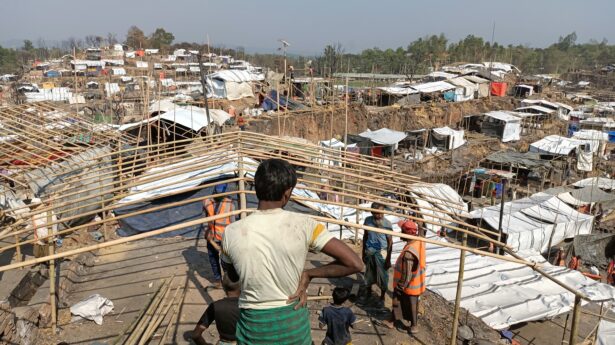
As a result, more than 800,000 are still living in temporary camps-more than two-thirds of which are informal-where they struggle to survive with no certainty about what will happen to them. People are unable to meet their basic needs of shelter, food, water, and sanitation. A lack of security for women and children in these camps is an urgent issue.

Survivors who fled to the countryside after the earthquake were overlooked by the aid response and received little help beyond what was provided by the low-income families that took them in. These survivors are struggling to build new lives for themselves and their families amid very challenging economic and environmental circumstances.

Haiti is the Western Hemisphere's poorest nation. Rife with radical inequality, Haitian society systematically excludes and marginalizes large numbers of people. For many people, daily survival was a challenge even before the earthquake; today, their lives are infinitely more difficult. In the years to come, how Haiti rebuilds and recovers will bear the stamp of the global community's values and priorities.

UUSC's Approach

UUSC stands with those who are working to reverse the cycle of collapse and dependence that has plagued Haiti throughout its history. Our goal is to support earthquake survivors in both Port-au-Prince and the countryside who are being marginalized by the mainstream aid response, expanding their access to livelihoods, shelter, protection, representation, and psychosocial support.

UUSC is employing all of our tools-partnership programs, policy and advocacy efforts, mobilizing and educating UUSC members, and engaging volunteers-to support our partners in building a just recovery for Haiti. Using our eye-to-eye partnership model to support Haitian organizations and social movements, UUSC will help their vision become reality.

Immediately after the earthquake, UUSC worked with grassroots partners to ensure that people had food to eat and the pots to cook it in. UUSC's partners also bought and distributed local seeds to help survivors and their host families increase food production. At the same time, with UUSC support, our program partners created thousands of jobs in the countryside that helped Haitians to put food on their tables and send their children to school.

In Port-au-Prince, our partners, with UUSC support, have created child-protection committees in 10 camps, trained hundreds of community activists to work against gender-based violence in the camps, and helped to organize economic training to get hundreds of women street vendors back on their feet. Throughout Haiti, UUSC has trained 90 Haitian community organizers to help survivors positively manage the biological responses to trauma. These are just a few examples of the needs that have been addressed by UUSC's programs and partners.

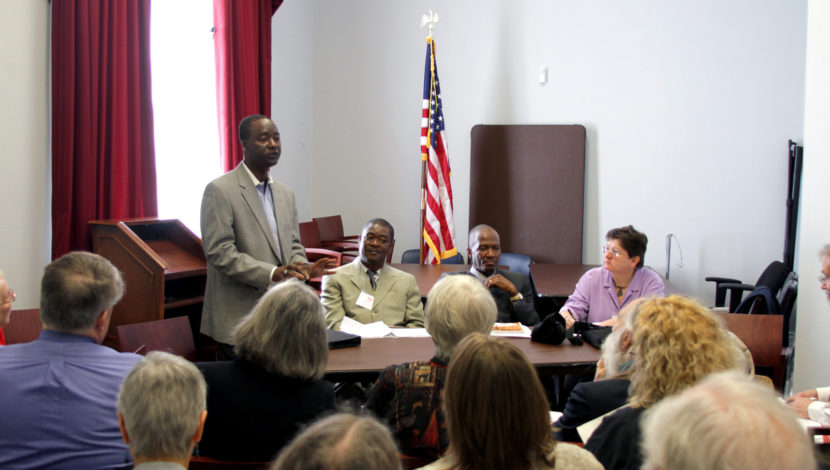
UUSC's advocacy efforts in Washington, D.C., are an integral part of the support we lend our partners. We have helped bring Haitian partners to meet with U.S. government officials and convey Haitian civil society's goals for a just recovery and reconstruction.

UUSC continues to develop initiatives with partner organizations in Haiti to address immediate and long-term needs in the aftermath of the earthquake. Moving forward, UUSC's work in Haiti will include:

  • Building a core group of Haitian trainers-of-trainers to provide trauma treatment and alternative healing practices to increase earthquake survivors' resiliency to trauma.

  • Protecting unaccompanied children in camps and transform attitudes about child servitude.

  • Continuing to develop creative strategies to reduce gender based violence against women and girls in the camps and surrounding communities.

  • Helping survivors reconstruct and develop livelihoods, particularly women in the informal sector, youth, and survivors in rural areas.

  • Keeping Haiti on the radar of policymakers and ensure that Haitians are included in reconstruction and recovery decisions.

  • Creating a successful volunteer program to help rebuild Haiti.

Together, and with your continued generous support, UUSC is acting in solidarity with survivors in Haiti to make a positive difference in their lives and their communities. Support the UUSC-UUA Joint Haiti Earthquake Relief Fund today.

Updated: August 12, 2011